about the artist
B. 1997, Michael Ray De Vries grew up in coastal Suffolk town, Felixstowe, after the two halves of his family had found their way there to work and live.
Michael’s maternal grandfather, Ray Garvey (b. 1943, d. 2001) was a painter from Enfield, North London. In his later decades, Ray lived and worked in the small commune of Saint-Maime in southeastern France, deeply inspired by rolling rural landscapes and sequestered villages of the Alpes-de-Haute-Provence. Here, he taught villagers, holiday makers and aspiring artists to capture their surroundings on canvas, and created many of his own works that inspire Michael to this day, keeping them connected despite the little time they had together. Michael’s mother Michelle drew on Ray’s style of landscape painting in her own work, and was herself integral to Michael’s desire to paint, relaying memories of her late father to him and maintaining a vast collection of his work at her home, wherever space can be found.
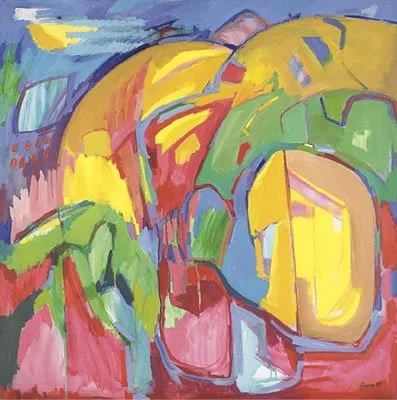
Hale-Bopp Over Provence, 1998oil bars on paperRay Garvey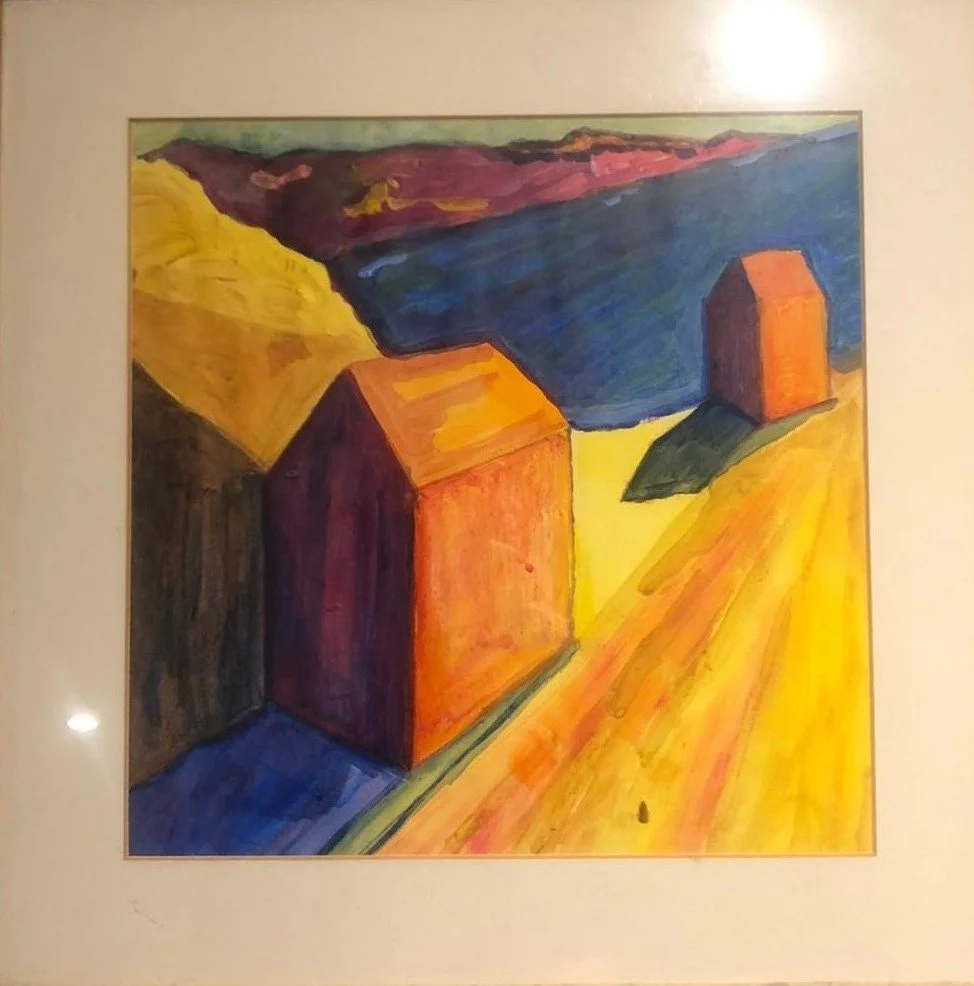
untitled landcape, c. 2010oil bars on paperMichelle Garvey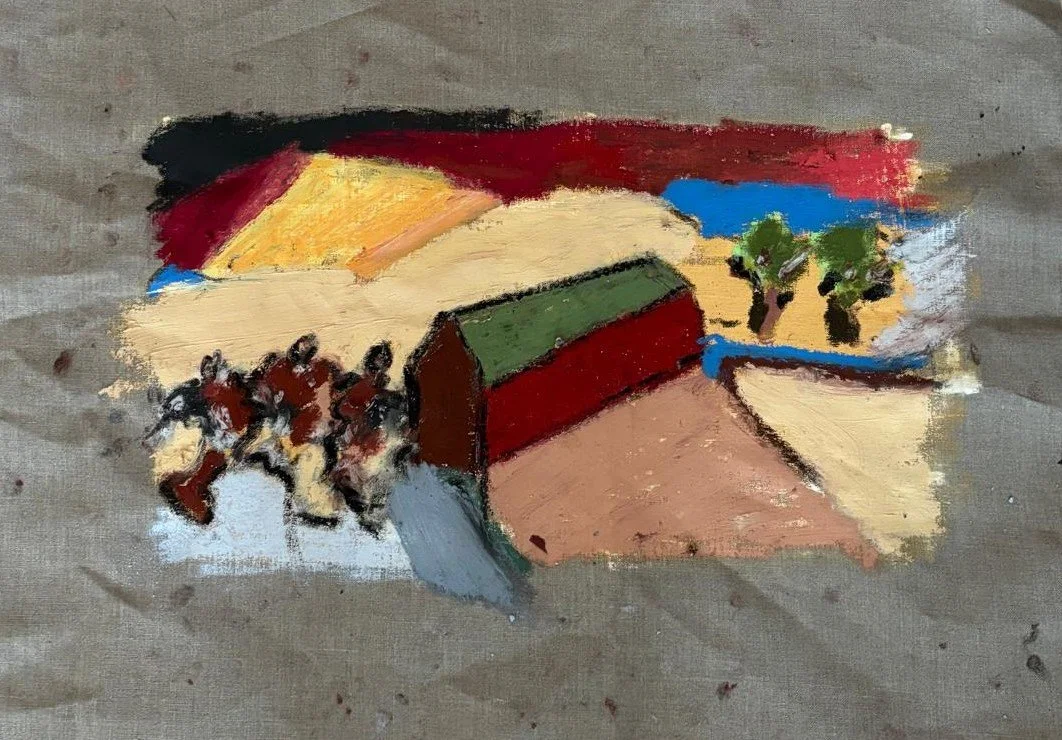
WIP, 2026oil bars on unbleached unstretched canvasMichael De VriesMichael’s father Trevor was born to South African and English parents in Bow, East London. A graphic designer turned docker, one of Trevor’s greatest strengths is his storytelling, passing his parent’s memory and history to Michael through his rememberings of the ways they mixed Cockney and Cape Town culture. Michael’s art explores this tension, and the interplay between both intensely real and imagined details of grandparents he never met.
Rather than recording his family’s oral history in writing, Michael explores it through his work, bringing together its different elements to shape his identity as an artist. This process creates a sense of layered memory, reflecting his interest in how different retellings can shift a recollection. He recognises that these layers may be loose or incomplete, yet they regain form when brought together through colour, texture, and shape.
During his time at Camberwell College of Arts, Michael worked primarily with spray paint, allowing him to reject the typical stretched, smooth, clean canvas and create works on found materials. Often, these wood and plastic pieces became sculptures that could lean on and lend impact to each other. His no-waste approach embedded Michael’s practice in the same streets his family came from and that he now inhabited. Works at this time were proclamative, centring issues important to the artist, such as mental healthcare, racism, and police brutality. Together, his media and subjects created a channel to send sentiments from working-class areas reverberating through an elitist art world.
Graduating in 2020 meant as Michael’s practice was freed from constraints of a degree syllabus, but increasingly confined between the four walls of his Bethnal Green bedroom. To extricate himself from the limbo between spray cans and need for space, Michael chose to begin using oil pastels, the medium favoured by his mother and grandfather. Focusing on this switch during a time of social isolation allowed his practice to shift from making statement-making and reproducing memories to expressing emotional responses to those ideas. Though his driving feelings and intent stayed consistent, working with oil pastels allowed his works to communicate in a more gradual, and layered way. Using pastels primarily on paper allowed the volume of Michael’s work to grow; in turn, he was able to experiment more with style and form, fostering the potential to connect with audiences more diversely and individually.
As well as his family members, Michael is influenced by the likes of Jean-Michel Basquiat, Pablo Picasso, and Karel Appel. He considers some of his greatest inspirations to be the contemporary London-based artists he follows through exhibitions and social media. In particular, Stephen Anthony Davids is a source of great inspiration, and someone whose creative process Michael has been lucky enough to witness in action.
Today, Michael continues to paint from his bedroom, surrounded by pieces that represent his own creative evolution, as well as works by those who guide and shape his style most.